Showing posts with label Boomer. Show all posts

Monday, March 14, 2016

Phobias and Anxiety in Dogs

This adorable beagle is Boomer.  I was blessed to have him live
with me for about 15 years. He had a severe phobia of children.

Dogs sometimes experience psychological  issues.

The term "Dog Psychology" should not infer that we analyze a dog based upon his reaction to pictures of ink blots. It does not work like that, However, dogs do occasionally suffer from psychological issues.

In this blog post, I attempt to address the psychological issues associated with anxiety and phobias in dogs. Anxiety in dogs factors into a lot of behavioral issues. In order to help the dog experiencing these issues, it is important that we understand a little about dog psychology.

I work with a lot of dogs that have aggression and anxiety issues. Most of the time, these issues can be traced to some sort of trauma in earlier life. However, this is not always the case. 

Genetics

So called, "inherited" fear is sometimes seen in entire litters of puppies. This type of fear is very difficult to address with training. The fear is persistent and tends to be generalized. In other words, the pups are generally fearful and reactive. This particular abnormality is generally observable in puppy-hood . It tends to begin around two to ten months of age and never completely goes away.

Some breeds are generally highly reactive and tend to have this inherited fear. Some examples of affected breeds are German Shepherds and Pointers. However, even in the affected breeds, this does not affect every individual dog in the breed.

Early life experiences

Sometimes experiences in puppy-hood imprint on the dog and have a long lasting effect. Nervous mothers or litter mates can influence lasting anxiety on a pup. Poor nutrition in puppy-hood  can have a negative effect on early mental development. Dogs that are isolated as pups tend to be reactive and very anxious as adults. Pups need stimuli at an early age. Their emotional development is negatively impacted when they are isolated from other dogs and/or  people.

Previous Trauma

Phobias, or irrational fears, in dogs can, in many cases, be traced to some early trauma. This happens because the dog associates a seemingly benign stimulus with a traumatic event. 

For example, a dog that is abused by a child may associate the pain of the abuse with all children. This dog may become extremely fearful of children. I suspect this is what happened in the earlier life of a beagle named Boomer that I adopted many years ago. Boomer was highly fearful of and aggressive toward young children. I did not live with any children so, it was safe for me to adopt him and work with him to address the issue. He was my loyal companion from the time he was nine months old until he died as a very happy senior dog at fifteen years of age. He was really a great beagle and I was somewhat successful in my attempts to help him with the phobia in regard to children. He got much better. It took many years, but he was eventually capable of being around children without growling, snapping, whimpering or getting physically ill. However, he never really became comfortable around children. He always showed subtle signs of stress when children were present. The point is that there was hope for Boomer. In the proper environment, he thrived. He would never have been suited for a home with young children but he was a great companion for me! It is important that we not set the dog up for failure. It would have been unrealistic to have expected Boomer to ever be a good dog for a child. That is something for which he was simply not emotionally nor psychologically capable.

Yes, Boomer's fear was irrational. Not all children would hurt him. In fact many of them distributed tasty treats to him over the years, which he loved. But, he was always, at least slightly, stressed around children. Whether or not the fear is rational makes it no more or less real. Boomer's fear was very real for him. It was important that I understand that and not force him to do more than he could do.

This is Cody relaxing with me.
Dogs also frequently develop a phobia of the veterinarian. This is understandable. The dog is quite likely linking a trauma that the vet was treating with the veterinarian. For instance, shots hurt. I hate needles. Our little Cody also hates needles. He once cried loudly when the vet simply removed the cap from the end of the needle. He associated the sound with the pain. Cody now loves the vet because the nice people at the vets office are always giving him tasty treats. He knows where the treat jar is kept in the exam room and he keeps sharp focus on it the whole time he is in the room. He now associates the vets office with really good, fun, and tasty stuff! 

Effect of the owner's fear/anxiety/phobia

As I frequently mention, dogs take their cues from us. They can sense when we are stressed and this can impact them greatly. This is why it is important that we control our emotions when working with our dogs. If we get overly excited, they in turn, become stressed.

For instance, when working with a dog that is scared of thunder, it is important that during a thunderstorm that you not react to the thunder. If you make a big deal out of the thunder, the dog's fear will be reinforced. You need to remain calm to help your dog remain calm. It really makes sense if you think about it. If the dog sees you reacting he thinks something like, "the person is upset too thunder must be really bad". The best thing to do is to act like you did not hear the thunder. Don't say, "poor baby" or something like that to the dog.  Just let the dog see that the thunder has no effect on you. I do not mean to suggest that this is the magic bullet to correct fear of thunder. However, it will help. There are other techniques that you can use as well. I will be happy to discuss this with you in a training session.

I hope this has been of some help for you.

If you have issues with an anxious dog or a dog that has some sort of phobia, please contact me. I am happy to help you!

-Till Next Time
This is our former foster, Dr. Phil McBeagle after his welcome to the
pack bath. When Dr. Phil first joined our pack he had a phobia of
doorways. We were able to help him get over that fear. He is now
happy in his forever home with an entire pack of beagles.

William

William Moore
Professional Dog Trainer
Co-Owner
Moore Services for Your Money
William Moore Canine Training
fayettedogtrainer@gmail.com
mooreservicesforyourmoney@gmail.com
678-702-4791
mooresvs.com


Tuesday, February 4, 2014

What to do with a dog who is malnourished or underweight.

If you look closely in this picture, you can see
that Foster Girl Penny the Tiny Beagle was
underweight when we first brought her to the Dog
Training/Foster Shack
All too often, we , as dog lovers we have to care for malnourished or underweight dogs. Sometimes it is a result of some sort of illness. Sometimes we take in a stray or adopt/foster a little guy or girl who has simply not eaten regularly in quite some time.
Boomer the Beagle in his later years

As many of you know, in the early 1990s I adopted a sweet beagle from the Dekalb County (GA) Shelter. He was a 9 month old anxious little guy named Boomer. Boomer was my companion until he died of renal failure at the age of 15 years. We had lots of fun together and I learned a great deal about anxiety issues in dogs from working with him.

When he was about eight years old, I was working as a Computer Network Engineer/Consultant at a now defunct company in Sandy Springs, GA called Consultec. Boomer got sick. I do not remember exactly what the health issue was now but a nasty side effect was that he lost a lot of weight very quickly. I could see all his ribs and some of his backbone. His normally extremely healthy appetite had disappeared. He would not touch any of his favorite foods. This was very unusual for him and just not at all beagle-like.

At the time, I lived in Marietta, GA. Dr. Tyler Huhman and Dr. David Lawless at Tritt Animal Hospital in Marietta, GA were the veterinarians that helped me to care for Boomer and a few cats that lived with me at the time (or maybe I lived with them.... you know how cats are ).

The guys a Tritt did an excellent job treating Boomer's illness! However, the home care was my responsibility.  I think it was Tyler who told me that the most important goal I needed to have was putting weight on Boomer quickly. I believe it was at his suggestion that I used Nutri-Cal in an attempt to stimulate his appetite and to load him up on the calories and nutrients that he desperately needed. I think Tyler gave me (or sold me, I don't recall) some prescription food that was formulated to help him gain weight (if I could get him to eat it).
You can't really tell now but, our little Cody was also
malnourished when he got to the Shack.

I worked from my small home office for about a week (we used to call that telecommuting). During that time I cared for Boomer almost 24/7. I gave him medication for his illness and almost constantly tried to get him to eat. He would eat some canned food and I slowly began getting him to eat the Nuti-Cal. Slowly he started to eating peanut butter that I offered him and eventually he began eating his dry food. It was a long week but he finally began eating well. After a couple of more weeks he was almost back to his healthy weight. And I seem to remember that after he put the weight on ,I spent a month in Minnesota on business over the next three days (at least that is what it felt like :) )

I did not just share that story with you so that you can see how cool my life was in those days (that is just an added bonus :) ) . I shared that story with you to make a few points about caring for a dog who is underweight or malnourished:


  • If you notice a rapid weight loss, please, consult a really good veterinarian. There is generally an underling cause that probably needs to be treated.
  • If your dog is not eating foods that he normally loves, if it lasts more than a day or so, you should really strongly consider taking him to a veterinarian.
  • Once you have any health issues treated, it is your responsibility to care for the little guy or girl. You must be diligent about it! Always remember that your veterinarian will be more than happy to talk to you about methods that you can use to get him/her to eat. If your dog is not making progress, do not hesitate to contact your veterinarian for guidance!
I mentioned Nutri-Cal earlier in my work with Boomer. Nutri-Cal is a high calorie vitamin paste. There are other similar products on the market. Most large pet stores (i.e. Petco, Petsmart, etc.) have their own store brand products that are labeled for the same use. When I worked at Petco, I found that our vitamin paste was good but some really picky dogs seemed to prefer the taste of the Nuti-Cal product and the price difference is not huge either way.

In many cases the dogs will eat this stuff right out of the tube. However, in many cases you have to put it on the food. In Boomer's case, I put some of the stuff on my finger and sort of stuck it to the roof of the mouth to get him started. It is really sticky and he had to lick it off the roof of his mouth. He did not really like this but it worked.
Foster Boy Sammy

I decided to write about this subject today because, The Lovely and Awesome Shane and I are working with our new foster boy, Sammy on the same issue. He is very thin. His ribs and backbone are clearly visible. I am happy to report that he is beginning to get his appetite back! This morning he actually finished his entire bowl of food for the first time since he got here three days ago!

If you have a dog who needs to gain weight, it is not a hopeless problem! It can be very frustrating but, there is hope and it feels really good to see a little guy or girl finally eat and gain weight!

Our foster girl Penny the Tiny Beagle had the same issue. She gained a little weight we she was with us. I saw her with her adopted family recently and she looks great!!

If you have questions about getting your dog to eat please contact me! Also contact me if you need help teaching your little guy or girl to be a polite dog. I always tell you: " Polite Dogs = Happy People". Let me help you get happy today!

Till next time

-William-

William Moore Canine Training
678-702-4791
fayettedogtrainer@gmail.com


Thursday, July 11, 2013

Meet the Breed - Beagle


 Okay, those of you who know me well know that I could not put off writing a "Meet the Breed" about my favorite breed, The Beagle.

I have raised, trained, owned, and been around these little guys for most of my life. Let me begin by stating that even though I really love them, they are not a breed of everyone. Let me tell you a little about these adorable little guys:

This breed has been around for a very long time. There is some controversy over the precise origin of the breed.

As with the almost all hound breeds in this country, their origin can be traced to England. I will not go into all the details of the history of this breed here. There is some very interesting information on the Internet. A good place to start, if you are really interested, is wikipedia.

The Beagle is a part of the group that we call scent hounds. They use their sense of smell to track game. In this part of the world (Georgia and the Southeastern USA) they have long been used to hunt rabbits and small game.

The AKC has recognized the Beagle since 1885 ( a couple of decades after the war of northern aggression :) ). The official standard for the breed has two sizes. An adult height of 13 inches and an adult height of 15 inches.

The AKC lists a variety of coloring and markings.In my experience, it seems that, by far the most common is the tri-color black tan and white. That seems to be the marking and coloring of both of the guys in my current pack. Copper also has some ticking. He is also bigger than 15 inches so it is possible that he is a mix of something other than Beagle (but don't tell him that).

The physiology of the Beagle is interesting. They are capable of sounding in at least three different ways. They can bark like any other dog. They can howl like other dogs. They can also bay. To do this they sort of stretch out the throat by holding the head up. A really cool gift that God gave the Beagle is that each Beagle has a slightly different baying voice. This makes it easy to identify which dog is on the trail when they are in the field. Rabbit hunters really like this about Beagles.

This is also one thing that makes the breed not a good fit for everyone. Most Beagles are quite vocal. And they do not really have a low or inside volume. It is a really pretty sound to those of us who have an affinity for the breed but people who have close neighbors, like those of you who live in apartments, may not find the sound quite so pretty.

These little guys are generally very affectionate. They are good with people and usually good with children. They are loyal.

Most of the Beagles that I have encountered are pretty good with other dogs as well. This can, however vary from dog to dog. Boomer, a Beagle that I had years ago was abused as a puppy. I adopted him when he was 9 months old and kept him until he died around 16 years old. He was never great around other dogs or around children. But, I suspect this was due, in large part, to his abusive puppyhood.

Many people refer to the Beagle as "determined" in most cases, I think "determined" is hardly a strong enough term. Most of these little guys are downright stubborn. They are sweet but can be very stubborn.

I realize that as a professional dog trainer, this may sound like self-promotion but, what I am about to tell you is the Gospel truth about these little guys. They require a great deal of mental and physical stimulation. And because they can be so "determined" or stubborn they require consistent training.

These guys are generally really happy when they are training. They can learn new behaviors and they actually learn pretty quickly with the proper motivation (treats).

The Beagle like most scent hounds is ruled by his nose. These guys love food! They are constantly searching for food or for something interesting to track and chase. This is really the Beagle's life. It is instinctual and at times really cool to watch.

Because they constantly search for food, you must beagle proof your home. If you don't you will regret it. See my previous blog post about Beagle-proofing.

As adults, when the Beagle is not searching for food or game he is resting or sleeping. These little darlings do not exercise on their own. The combination of this determined drive to find food and equally determined drive to not exercise is why you see so many overweight and frankly obese Beagles.

You must provide exercise for your Beagle! It is not enough to just let him out in the fenced back yard. He will sniff around out there for a while... maybe chase a rabbit or chipmunk.. then he will lie down and sleep. I have seen this many times :). You really have to take them out on the leash or do some sort of interactive exercise in the fenced yard. This is another reason that the Beagle is not for everyone.

Also, because the Beagle is so driven by his nose, once he gets on the trail of something, he sort of has tunnel vision. He is also very good at escaping a fence or containment device. I strongly recommend that you not, under any circumstances leave your beagle unattended in a fenced back yard. He will find his way out. Boomer once scaled a six foot chain link fence. He just climbed right over.

The Beagle can be one of the most affectionate breeds you will ever encounter. As I have written before, my guys know when I am sick and will not leave my side until I feel better. It is really a cool thing to see. These guys also have quite the personality. Some are outgoing and very friendly like Copper. Some are a little more reserved but affectionate like our little Cody.

If you can live with the cons that I have mentioned here, the Beagle will be one of the best little buddies you could ever hope for.

Remember, if you are seriously considering an addition to your pack. Please, please, please consider adoption. Also consider adopting an adult dog (these guys are generally wonderful and do not get homes as quickly as puppies). If you need the names of some good rescue organizations contact me or see my previous posts on the heroes of dog rescue.http://fayettedogtrainer.blogspot.com/2013/06/the-local-heroes-of-dog-rescue.html and http://fayettedogtrainer.blogspot.com/2013/06/another-local-dog-rescue-hero.html

Let me be clear. I have nothing against breeders. There are some great breeders out there. I will not be mad at you if you use one. I just ask you to consider adoption. There are so many really good guys that need a home and many of these sweet little guys are euthanized every day because no one will give them a home. And I provide discounted Dog Training Services to all adopted/rescued dogs, perhaps that will be an incentive to you as well :) .

If you have questions about the suitability of a Beagle or any other breed to your pack, please contact me anytime.

Till Next Time


-William-

William Moore
William Moore Canine Training
678-702-4791
fayettedogtrainer@gmail.com


Wednesday, July 3, 2013

Happy Independence Day! What do I do when my buddy is scared of fireworks?


The Lovely Shane, Cuddles the Corgi mix, Copper the Whopper Beagle, Cody the Little Beagle and wish you a happy and safe July 4th! The picture is from a laser light and fireworks show at the State Park in Stone Mountain, Georgia. If you have never seen one of these you should. This time of the year, I think they do them weekly.

Firecrackers and certain types of fireworks that makes noise is not legal for home use in Georgia. So, I am certain that none of my Atlanta area readers ever encounter loud fireworks in your neighborhoods :) . Many years ago, I lived in a sub-division in eastern Cobb County, Georgia. All fireworks were illegal at that time. It sounded like a war zone around my house on New Year's eve and July 4th. I am certain this was from some local licensed fireworks show and not my neighbors with  contraband firecrackers and M-80s :).

At the time I lived in Cobb County, I had a very nervous Beagle named Boomer. Like most of my Beagle buddies over the years, Boomer was a rescue. He was abused as a young puppy and had many anxiety issues. He was very scared of the noise that accompanied these local fireworks shows.

There are desensitization techniques that can be utilized for dogs that are scared of fireworks or thunder. They basically involve exposing the dog to loud noises that mimic the fireworks like recordings of fireworks, etc. You do this in a very controlled way and begin to associate good things with the offensive noise. Desensitization takes a while and if you are consistent with it, it can be very effective. However, the occurrence of fireworks is so infrequent that avoidance may be a better technique.

This may sound like common sense and the obvious answer, but I always kept Boomer inside during these fireworks displays. I also tried to mask the sound by having music playing or the TV tuned to one of his favorite channels.

It is always important to remember that, to a very large extent, your little buddy takes cues from you. So, with that in mind, try not to react to the fireworks. Do not make a big deal about them or call him poor dog and pet him every time you hear a boom. Also, if he wants to hide under a table or something, or if he wants to sit next to you on the couch, do not discourage this behavior. If your buddy sees that you are not reacting, it will probably help in calming him as well.

It has been my experience over the years that my little buddies who were afraid of thunderstorms were also afraid of fireworks and gunfire. So, some of the same techniques may be effective. I make this point because with many dogs that have moderate anxiety, the Thundershirt product is very effective. It does not work with every dog but I had many customers when I worked at Petco who said the product made a huge difference in anxiety level. There are also pheromone based sprays that seem to be effective with some dogs that have moderate anxiety. As in the case of the Thundershirt, this does not seem to work with every dog.

In extreme cases of anxiety, in other words if the dog is so anxious that he is hurting himself or being very destructive, your veterinarian can advise you about potentially using anti-anxiety medication for situations that you know are anxiety provoking.

If you do not have a regular veterinarian or if you suspect your vet is an evil alien :) , I will be happy to assist you in finding one.... I hope my readers appreciate my attempt at humor and don't just find it strange :).


I think our newest pack member, little Cody, may have some issues with fireworks this year. I have noticed that he is anxious during thunder storms. He is not relaxed like in this picture. On the contrary, he follows me everywhere and loves to lean on me an sit as close to me as possible. I will let you know how he does with the fireworks (if we have any in my law-abiding neighborhood).

Seriously, If you need help with an anxious dog or if you have any dog training needs, dog related questions, etc. , please contact me at any time!

I hope that you all have a great July 4th! The Lovely Shane is helping to care for her grandfather while her parents take a little out of town trip. I plan to take care of our pack and
 do some bathroom remodeling here at the Dog Trainer Shack. There is one other special activity in which I am going to participate: There is a radio contest this weekend called 13 Colonies. Amateur Radio Operators running special stations in all 13 original colonies are making contacts. If you contact all 13
of them you get a really cool certificate! I already have a start. Last night I contacted the New Hampshire station from the shack here. I was only operating at an output power of 5 watts. For those of you who are unfamiliar with radio, I probably would have used more power to yell out the window :) .

Well... Have a great 4th! Be careful.

Till Next Time

-William-

William Moore
William Moore Canine Training
678-702-4791
fayettedogtrainer@gmail.com


Friday, June 28, 2013

Dog Fences and Other Containment Devices

When the weather is nice outside, it is tempting to let the dogs run. Actually, it is a really good idea to let them get off-leash exercise if you have the proper place to for this sort of activity. Our pack loves to be outside in the sun!

The Lovely Shane and I have a backyard that is enclosed with a 4 foot high chain link fence here at the Dog Trainer Shack. This is certainly not in any way an adequate containment system for an unsupervised Beagle. However, it is adequate for supervised romps. Copper just loves to track and chase chipmunks, squirrels feral cats, grizzly bears and whatever other interesting critters make their way inside the fence. Well perhaps I exaggerated the grizzly bear thing :).

I mentioned that this 4 foot chain link fence is not an adequate containment system for a Beagle that is unsupervised. Many of you new Beagle buddies or those of you who have never had a Beagle buddy in your pack may think that I am overly cautious here. I have been around Beagles most of my life. One should never, ever, ever, ever underestimate a Beagle's ability or determination to escape. It is not that your little guy or girl is not happy living with you, it is that the Beagle has a very strong instinctual drive to track game. If he/she is on the trail of something the focus of the little brain is very narrow. All he/she is thinking about is following the trail. This is one thing that makes them wonderful hunting dogs. A Beagle with its relatively short legs can follow a trail with its nose to the ground without slowing down to sniff.

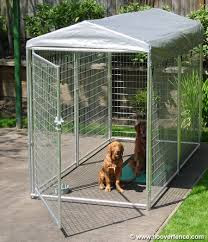
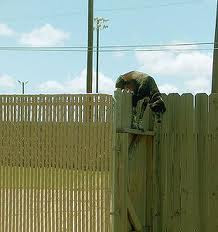
I went into the house for just a couple of minutes the other day and one of our pack (not sure which member, I am not convinced that it was not a group effort) was on the trail of something and began digging under the fence. I have temporarily filled the hole with brick and concrete block until I can make a more permanent repair. Under is not the only way a Beagle will try to escape either. I once had a very smart guy named Boomer. When he was about 4 years old, he once climbed over a 6 foot chain link fence! He looked a lot like the guy in the picture here scaling the privacy fence. If you need to leave your dog unattended outside for short periods of time (please do not do this for extended periods) there are some options. You can build or buy a kennel type chain link enclosure. some of these have tops that will keep out rain and sun.


If you anchor these enclosures to a concrete slab the dogs will be unable to dig out.

The Lovely Shane and I are planning to, one day, install a 6 foot privacy fence on at least one side of the back yard. Perhaps we will install one or two of these cool portholes. This will allow out pack to look out. Besides, I think it looks really cool :).

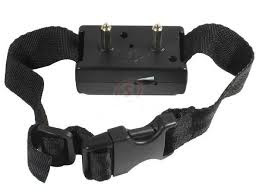
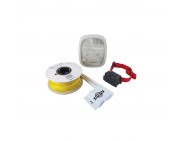
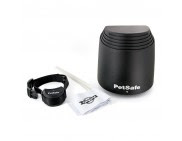
Okay, now I am going to mention something that is a little controversial.  The devices that utilize shock collars to make a so called "underground" or" invisible fence". What I am about to write is my opinion as an electronic engineer and a dog trainer. To call these devices "fences" fosters a false sense of safety and security and, in my opinion, borders on fraudulent. These devices sometimes use a buried wire and sometimes use RF (Radio Frequency) transmissions. When the dog gets near the "border" he receives what is sometimes called a static correction. I have studied electronics for many years. It was a career for me. I am now an FCC Licensed Amateur Radio Operator and it is also a hobby of mine. Please, let us not sugar coat this matter. I have never, other than from the manufacturers and advocates of these devices, heard the correction that they provide called "static". I suppose in the academic electrical sense this is technically accurate. But, my friends and readers, in a strictly scientific, electrical sense, lightning is static. Static does not, in any way, co-notate safety. What the collars that come with these devices do is administer a high voltage, low current electrical shock to the dog in the guise of "correction". To some extent it is effective. It does get the little guy or girls attention. However, do they really understand why they are being "corrected" ? I am not convinced that they understand.

A dog can and in many cases will learn that if he/she runs hard and fast enough the "border" can be crossed. He will only get a short and painful electrical shock. The really bad thing about this is if the dog tries to return he will get the shock at the border again. Also, my friends, these collars are in no way foolproof. Batteries can get weak or die. The collar can slip off. The control unit can lose electrical power making these things completely and utterly useless. The underground wire can be accidentally broken. An adjacent transmitter could possibly interfere with the signal from the wireless transmitter rendering its performance unpredictable. Many things can happen to make these devices even less effective.

I am also not at all convinced that these collars are safe. Because of the way the heart works (remember I am not a doctor, don't even play one on T.V.) electrical shocks, even non-lethal ones, can be dangerous to dogs and people.

It is very rare that I find myself in agreement with PETA. They are generally much too radical for me. However, I have to agree with most of their position on shock collars when used as a "fence" or containment device


If you use Google or the search engine of your choice, there is no shortage of images and stories of dogs who were reportedly hurt or killed by shock collars. By the way, just because a product has the word "safe" and "pet" in the name does not mean that it is absolutely safe in all respects to all pets in all applications.

Please understand I am not stating that there is no legitimate use for these devices. In some very extreme cases of aggression, these shock collars with a remote (not as a so called fence) can sometimes be effective as a last resort only. However, this should be done under the supervision of a professional ( a dog trainer, canine behaviorist, or veterinarian).

During my time working at Petco, I saw many of these shock collar devices sold. Some of them for bark control, some of them for containment, and some with the remotes were sold for "training" purposes. They were almost never sold to be used as a last resort in a difficult case. Many times people bought them expecting them to be a magic bullet for behavioral issues. Many times, at the store where I worked in Peachtree City, GA they were bought to be used as "fences" so that the people in deed restricted communities did not have to put up an "unsightly" real fence. I always explained how these devices really worked to customers. But in many cases they bought them as "quick fixes" because of the way these things are miss-marketed. These things are promoted by Petco as "training aides" look at their website there is really no explanation of exactly how these devices work and the inherent dangers of them. I guess there is a great deal of profit to be made here. I suppose that is the real focus at the place "where the pets go".


Well, as always if you have any dog training questions or concerns, please contact me. Also I do, as many of you know, operate a Handyman business. If you have any questions about proper fences or need one installed or repaired also please contact me.

Till next time
-William -

William Moore
William Moore Canine Training
fayettedogtrainer@gmail.com
678-702-4791

William Moore
William Moore Lawn and Handyman Services
fayettelawnmoore@gmail.com
678-702-4791

Friday, May 24, 2013

Dog Bite Prevention

Well the American Veterinary Medical Association has designated the week ending on May 25 as "National Dog Bite Prevention Week".

I think it may be prudent of me to mention some things about dog bites. I have been around dogs for most of my life. I suppose than means  I have been around dogs for about 47 years now. I have been bitten on more than one occasion and, in case you are in suspense here, it hurts.

Each time that I was bitten, I can directly trace it back to something that I did not understand about the dog's behavior. Also in each instance the dog gave warning signs that I was either ignorant of or that I just ignored. With very few exceptions, most dog bites are preventable. 

A stressed dog is likely to bite and there are dog body language indicators of stress. Growling, showing of teeth, etc. are some of the more obvious signs but to a more experienced observer there are more subtle signs like stiffened posture, tail position, etc. It is a little beyond the scope of this post to teach all the signs but, be aware that most of the time, the dog gives ample warning before biting.

I used to warn the people that I worked with at Petco that perhaps the most dangerous and underestimated dogs in terms of biting an employee, are probably the little dogs that people have in shopping carts or carry in their arms. Please be careful trying to pet these guys! If they are a little stressed, it can quickly escalate mostly because the dog feels trapped in the cart or because the person is holding him. 

It is also a good idea to ask the handler before petting or approaching a dog that you do not know. And even with permission, be careful how you approach the dog. Never tower over the dog. Avoid petting the dogs head. I always slowly approach making a large arc (not directly walking up to the dog) from the side of the dog I offer a closed fist. If the dog sniffs and seems relaxed, I pet under the chin or on the back. Never on top of the head.

These are just a few of the basics. There is some very good information on the American Veterinary Medical Association web site at : https://www.avma.org/Events/pethealth/Pages/Dog-Bite-Prevention-Week.aspx.

I will end with a story that indicates how a dog bite can be a very dangerous thing. It also demonstrates that I too am more than capable of doing stupid things:

Many years ago, I guess about 15 years ago now, I lived in Port Charlotte, Florida. I had recently moved there from the Atlanta Area. I took my Beagle named Boomer with me. At that time Boomer was about 7 years old. Boomer and I had a lot of fun together and spent most of our time together. Boomer and I were getting ready to go to Atlanta to spend Thanksgiving with my family.  Well, I was packing and Boomer was sleeping on my pillow on the bed. Boomer was a rescue dog. I adopted him when he was 9 months old. Sadly, he was abused as a puppy. We had to be careful waking him because he scared really easily. He also did not like anything or anyone near his muzzle. Well, I accidentally woke him and got a little too close to his muzzle doing it. He bit me on the lip. He cut it open good. Blood was everywhere. Boomer went back to sleep as I ran to the bathroom to tend to my lip. I had to go to the hospital emergency room in this small Florida retirement community. After spending several hours in the emergency room, I got several very painful stitches in my lip. The point of this story is that Boomer gave me many warning signs that I ignored or forgot about. He was always anxious when people got too close to his muzzle (as most dogs are). I also made the mistake of carelessly waking him. You should always be careful when waking a dog. Absolutely do not get near the face when you do it. I really, to this day, do not think that he realized he had bitten me. I am not sure he even completely woke from his sleep. When I came back all bandaged up, he was my best friend. He was worried about me and would not leave my side. Boomer and I did not make it to Atlanta for Thanksgiving that year. We had turkey in Port Charlotte with the natives. Well, Boomer had turkey, I think I had some sort of liquid for the next week or so :).

So, the lesson that I hope you will get from the my dog bite experience with Boomer is to be aware that  any dog is capable of biting. You must watch for the warning signs. But, if you know what to look for it is pretty easy. You must also be careful in approaching strange dogs. This is particularly true of stray  dogs. 

I will be happy to talk to you about Dog Safety at anytime. I will also be happy to demonstrate to you how to approach a strange dog using Copper to help me demo. Contact me if you are interested.

Till Next Time

William

William Moore Canine Training
fayettedogtrainer@gmail.com
678-702-4791